Anion Gap Calculator: A Guide for Future Clinicians
What Is the Anion Gap?
The anion gap is a simple way to assess whether there are unaccounted-for ions in the blood. It is calculated from common values on the electrolyte panel and helps you interpret an acid-base disorder, especially metabolic acidosis. For students in medicine, the anion gap is one of the most efficient ways to move from raw serum electrolytes to a meaningful clinical interpretation.
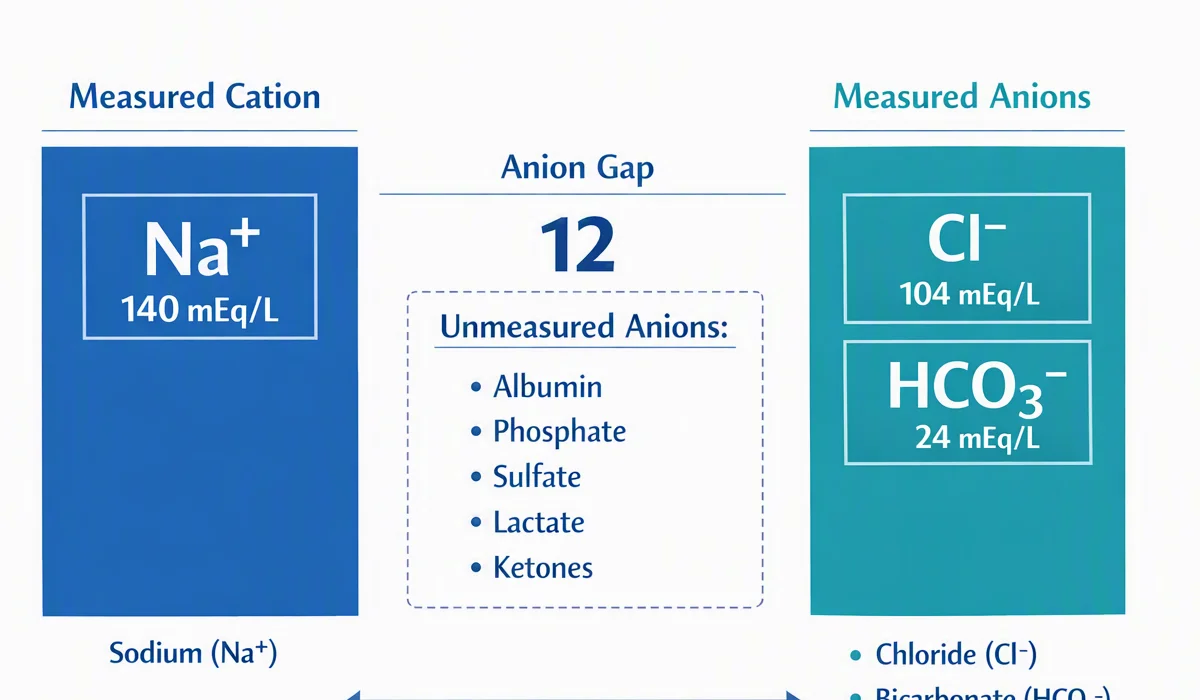
In practice, the anion gap reflects the connection between measured sodium, chloride, and bicarbonate. Since the body must maintain electrical neutrality, a change in one of these values often points to an accompanying electrolyte imbalance or a hidden metabolic derangement. That is why the anion gap is an especially helpful diagnostic tool in patient evaluation.
Students often think of it as a memorized number, but it is far more helpful as a clue. A high anion gap indicates that acid is accumulating or that unmeasured anions are present. A normal anion gap suggests a different set of causes, often involving bicarbonate loss with compensatory chloride retention. Understanding this distinction is vital for building a strong differential diagnosis.
How to Operate an Anion Gap Calculator
An anion gap calculator is a convenient way to complete the gap calculation rapidly during study time, clinical rounds, or exam preparation. Most calculators request serum sodium, serum chloride, and serum bicarbonate. After entering those laboratory values, the calculator provides the anion gap, at times with a corrected result if albumin is low.
The process is straightforward:
- Add the patient’s sodium value.
- Add the chloride value.
- Input the bicarbonate value.
- Check the calculated anion gap and match it to the reference range.
Clinically, the calculator helps you focus on the bigger question: does the acid-base picture fit metabolic acidosis, and if so, what is the underlying cause? A calculator is valuable because it removes arithmetic errors and accelerates recognition of patterns in the electrolyte panel.
For exam settings, always combine the calculator output with the full context of the patient’s acid-base status. A single number does not confirm the diagnosis. Instead, it directs the next step in the patient evaluation, whether that means checking lactate, ketones, kidney function, or medication exposure.
Anion Gap Formula and Typical Range
The classic anion gap formula is:
Anion gap = sodium - (chloride + bicarbonate)
This formula uses the main measured cations and anions on a standard panel. Because sodium is usually the dominant cation, the result estimates the difference between measured positive and negative charges. The precise formula may vary slightly depending on the lab or calculator, but this version is the most familiar for medical students.
The normal anion gap varies with the lab method and whether potassium is included. Many teaching resources use a reference range roughly around 8 to 12 mEq/L without potassium, but you should always rely on the specific reference range when available. The important point is not memorizing one universal number, but recognizing whether the value is elevated compared with the https://anion-gap-reader583.readspirex.com/posts/can-kidney-failure-raise-the-anion-gap expected range.
Albumin matters because it is a major unmeasured anion. When albumin is normal, the gap better reflects the expected balance of measured and unmeasured ions. When albumin is low, the gap may appear falsely reassuring. That is why albumin correction is an key part of interpretation, especially when you suspect metabolic acidosis but the raw number looks normal.
A helpful exam habit is to think in layers: first calculate the gap, then decide whether it is normal or elevated, and then use the pattern to narrow the differential diagnosis. This structured approach improves confidence and reduces missed diagnoses.
Corrected Anion Gap for Reduced Albumin
Hypoalbuminemia lowers the calculated anion gap because albumin adds negative charge to the circulation. If albumin is reduced, the patient may still have an important acidosis even though the uncorrected gap looks normal. That is why the corrected anion gap is so important in practical medicine.
The idea behind the correction is simple: if albumin is low, the gap should be shifted upward to account for the missing unmeasured anions. This albumin correction helps prevent overlooking a hidden high anion gap process. For students, this is a common test pitfall and a frequent source of error during clinical interpretation.
A practical way to think about it is this: the lower the albumin, the greater the chance the uncorrected value will miss acid burden. In critically ill patients, patients with malnutrition, liver disease, or inflammation, checking for hypoalbuminemia should be part of the normal workup. If the calculator includes corrected output, use it. If not, calculate it manually or read carefully.
Remember that the corrected result does not replace the rest of the evaluation. It simply increases sensitivity for detecting hidden acid-base status changes. In other words, the corrected number helps you ask better questions about the patient’s metabolic state rather than relying at the first result.
Elevated Anion Gap Metabolic Acidosis: Common Causes
A high anion gap generally indicates there are excess acids in the blood or an build-up of unmeasured anions. This pattern is key to diagnosing high anion gap acidosis and is one of the most frequently tested topics in acid-base review. The leading causes medical students should know include lactic acidosis, ketoacidosis, and uremia.
Lactic acidosis happens when lactate builds up due to tissue hypoperfusion, hypoxia, sepsis, seizures, or severe metabolic stress. It is a well-known cause of elevated gap and should be considered whenever the patient appears ill. In practice, lactate is often one of the earliest follow-up labs when a gap is high.
Ketoacidosis is another major cause. This includes diabetic ketoacidosis, alcoholic ketoacidosis, and starvation ketosis. The common theme is ketone body accumulation, which contributes unmeasured anions and raises the gap. Look for hyperglycemia, dehydration, abdominal pain, or a compatible history, depending on the scenario.
Uremia from advanced kidney dysfunction can also produce a high anion gap because retained acids are not adequately excreted. In this setting, kidney function testing and the overall clinical picture are essential. A student should always connect the laboratory result to the patient’s symptoms, renal history, and broader metabolic picture.
Other causes may appear on exams, but these three are the core starting points. A useful strategy is to ask: is the body producing extra acid, failing to clear acid, or both? That question quickly organizes the differential diagnosis and prevents random memorization.
Standard Anion Gap Metabolic Acidosis: Typical Causes
A normal-gap anion gap metabolic acidosis is referred to as hyperchloremic metabolic acidosis. With this pattern, bicarbonate is lost, and chloride goes up to maintain electrical neutrality. The result is a normal computed gap even though the patient is clearly acidotic. This is a classic example of why looking only at the gap can be misleading.
Diarrhea is one of the frequent causes. The gastrointestinal tract loses bicarbonate-rich fluid, and the serum chloride climbs in compensation. If a patient has significant GI losses and a low bicarbonate, a normal gap should make this diagnosis rise on the differential.
Tubular renal acidosis is another important cause. Here, the kidneys do not manage to acidify the urine or conserve bicarbonate properly. It is a key consideration when the patient has persistent metabolic acidosis without obvious GI losses, especially when kidney function seems otherwise preserved.
These patterns matter because the treatment depends on the mechanism. If the cause is hyperchloremic acidosis, the approach may focus on fluid loss, renal evaluation, or replacing bicarbonate in selected cases. The gap itself does not provide the treatment; it guides the workup and sharpens the diagnostic differential.
For students, the most important takeaway is that a normal gap does not mean “no problem.” It often means the acid-base disorder is caused by bicarbonate loss rather than unmeasured acid accumulation. That distinction is essential for accurate interpretation.
Clinical Interpretation Pointers for Medical Students
Solid clinical interpretation begins with the full electrolyte panel, not merely the value from the analyzer. Step one is to establish there is an acid-base disorder by looking at pH and bicarbonate. Next, determine the gap. Then, judge whether the pattern fits a high anion gap or a normal anion gap pattern. Last, match the result to the probable cause.
An effective mental framework is to consider the most probable underlying cause before chasing rare diagnoses. If the patient is unstable, consider lactic acidosis. If there is diabetes, poor intake, or alcohol use, suspect ketoacidosis. If kidney function is poor, suspect uremia. If there is diarrhea or chronic GI loss, consider diarrhea and renal tubular acidosis.
A frequent exam pitfall is ignoring hypoalbuminemia. If albumin is low, the raw gap may minimize the degree of acidosis. This is why corrected values are part of good practice and why many acid-base disorders questions include albumin for a reason.
These are a few quick habits that help in patient evaluation:
- Make sure to review the complete electrolyte panel, not merely the anion gap.
- Check whether the result fits the patient’s acid-base status.
- Use albumin correction when albumin is abnormal.
- Apply the gap to sharpen the differential diagnosis, not to finish it.
- Think about whether the pattern suggests a metabolic derangement or compensation for another disorder.
For exams, practice turning a raw number into a story. Example: “This patient has metabolic acidosis with an elevated gap, which raises concern for lactic acidosis, ketoacidosis, or uremia.” Such reasoning is exactly what faculty expect when they assess understanding of the anion gap calculator and its clinical use.
FAQ About the Anion Gap Calculator
What is an anion gap calculator used for?
An anion gap calculator is used to rapidly compute the anion gap from sodium, chloride, and bicarbonate. It helps determine whether a patient’s metabolic acidosis is more consistent with a high anion gap state or a normal anion gap process. For medical students, it is a practical diagnostic tool for structuring the differential diagnosis.
What is the normal anion gap range?
The normal anion gap differs by lab and method, so the exact reference range may be different. Many educational settings use a range around 8 to 12 mEq/L without potassium, but you should always read the result in the context of the local laboratory values. The key is whether the result is not typical for that specific setting and whether the patient’s acid-base status fits the pattern.

Why do you correct the anion gap for albumin?
You adjust the anion gap for albumin because hypoalbuminemia can make the uncorrected value seem smaller than it truly is. Since albumin is a major unmeasured anion, low levels can hide a clinically important high anion gap disorder. The corrected anion gap improves interpretation and helps reduce the chance of missing a significant metabolic problem.
What causes a high anion gap metabolic acidosis?
The most common causes of high anion gap metabolic acidosis include lactic acidosis, ketoacidosis, and uremia. These conditions increase unmeasured acids or reduce acid clearance. When the gap is elevated, the next step is to identify the underlying cause based on the clinical picture, history, and other laboratory findings.
What causes a typical anion gap metabolic acidosis?
A normal anion gap metabolic acidosis is frequently due to diarrhea, tubular acidosis, and other cases of hyperchloremic acidosis. In such situations, bicarbonate is reduced or depleted and chloride rises to maintain balance. This pattern is significant because it indicates the absence of excess unmeasured acids and toward the possibility of bicarbonate loss or renal handling problems.